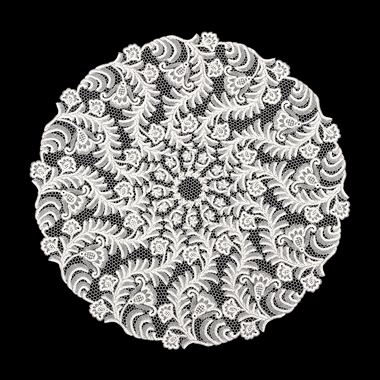
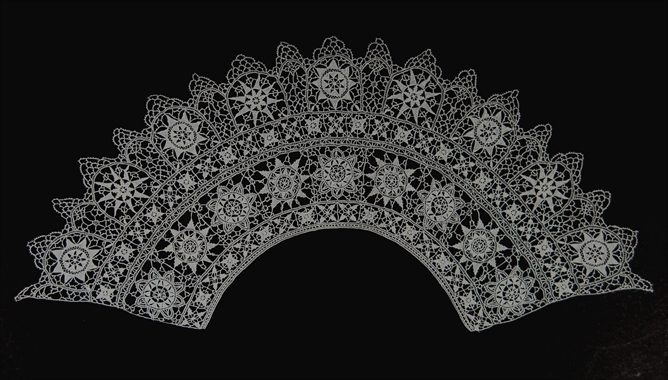
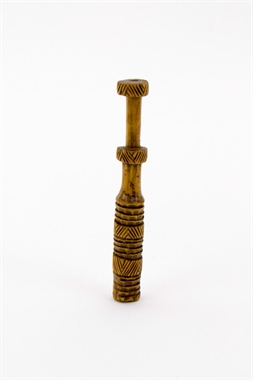
In the second half of the 19th century, when textile items from rural communities began to be collected, the criterion was not their integrity, but the decorated parts. With the establishment of the Ethnographic Museum, numerous fragments of lace, as well as fragments of embroidery and weaving, were included in the collection, studied within the Department of Textiles with a special focus on their historical development, technological and artistic characteristics. Since the beginning of the Museum's exhibition activities, lace has had the status of folk art, and over time, of applied folk art. Namely, lace for clothing and home decoration was made by women as a part of the rural economy. In the late 19th and early 20th centuries, first lacemaking courses and schools were founded, and the organized purchase of lace began. For these reasons, the Lace Collection primarily consists of samples of homemade lace, ranging from decorative parts of linen costumes and furnishings from a particular region, lace samples from lacemaking courses, to decorations in the interior of a bourgeois house. The collection has around 3,700 museum objects and includes lace made using two basic techniques - needle lace and bobbin lace, but also lace creations - filet lace, knitted lace, crocheted, kerana (i.e. knotted) lace, machine-made lace, and macramé lace. Lacemaking accessories include templates, frames and cushions for making lace, needles, hooks and bobbins, as well as frames, lucenj (loom) for knitting jalba (a headdress for women). The objects originate mainly from Croatia, but there are also pieces from Italy, Belgium, Slovenia, the Czech Republic, Slovakia, France, North Macedonia and Bosnia and Herzegovina. The collection is significant in the context of research into European lacemaking and the women's work.
We use cookies to track visits to our pages (Google Analytics) for the purpose of improving the pages. The statistics are collected anonymously, and by accepting, you agree to the use of cookies. Find out more