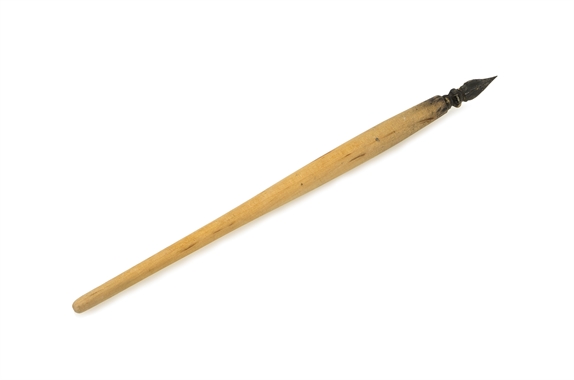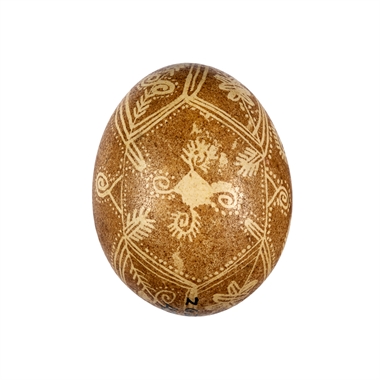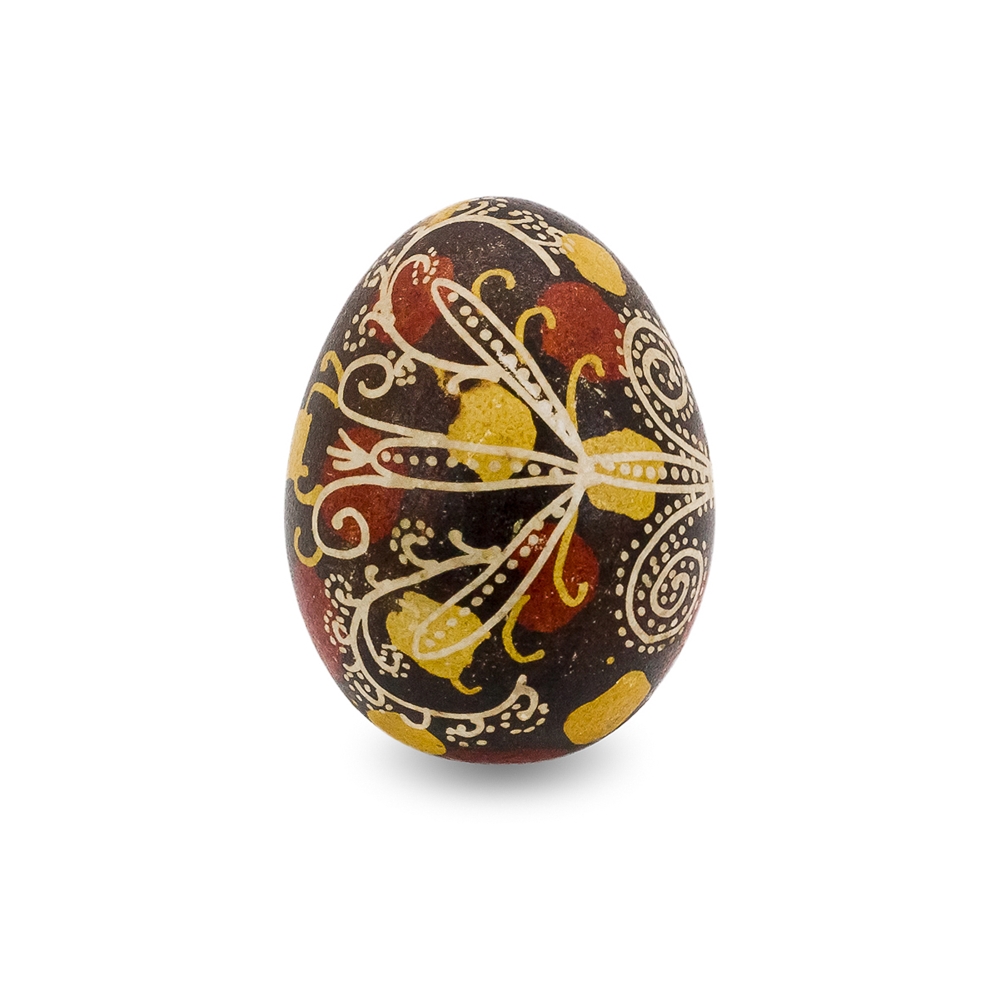
Easter eggs were already present in the first exhibitions, but the independent Collection of Easter Eggs was formed in 2014 by re-systematizing the museum collections and separating Easter eggs, tools and materials related to their production from the Collection of Objects Related to Customs and Beliefs. It has about three and a half thousand objects. In addition to the initial holdings, the objects in the Collection were collected in the first years after the Museum's foundation through the activities of museum trustees, while in recent decades they have been collected through field research and donations. A smaller number of objects are works of art. A group of older museum acquisitions date back to the first half of the 20th century, while only a few date back to the late 19th century. In recent decades, the Collection has acquired a significant number of Easter eggs exhibited at thematic Easter exhibitions and created at educational workshops. The purpose of Easter eggs is customary and ritual, related to the Easter. They are made during Holy Week, most often on Good Friday or Holy Saturday. Older Easter eggs were decorated with natural plant dyes and materials, and later industrial dyes came into use. Most of them are made of chicken eggs, and the most common decoration technique is "wax painting". Other techniques used are scraping, acid drawing, painting, appliqué and braiding, etc. The objects in the Collection originate from Croatia, Bosnia and Herzegovina, Slovenia, Kosovo, Vojvodina, Romania, Ukraine and Poland.
We use cookies to track visits to our pages (Google Analytics) for the purpose of improving the pages. The statistics are collected anonymously, and by accepting, you agree to the use of cookies. Find out more